
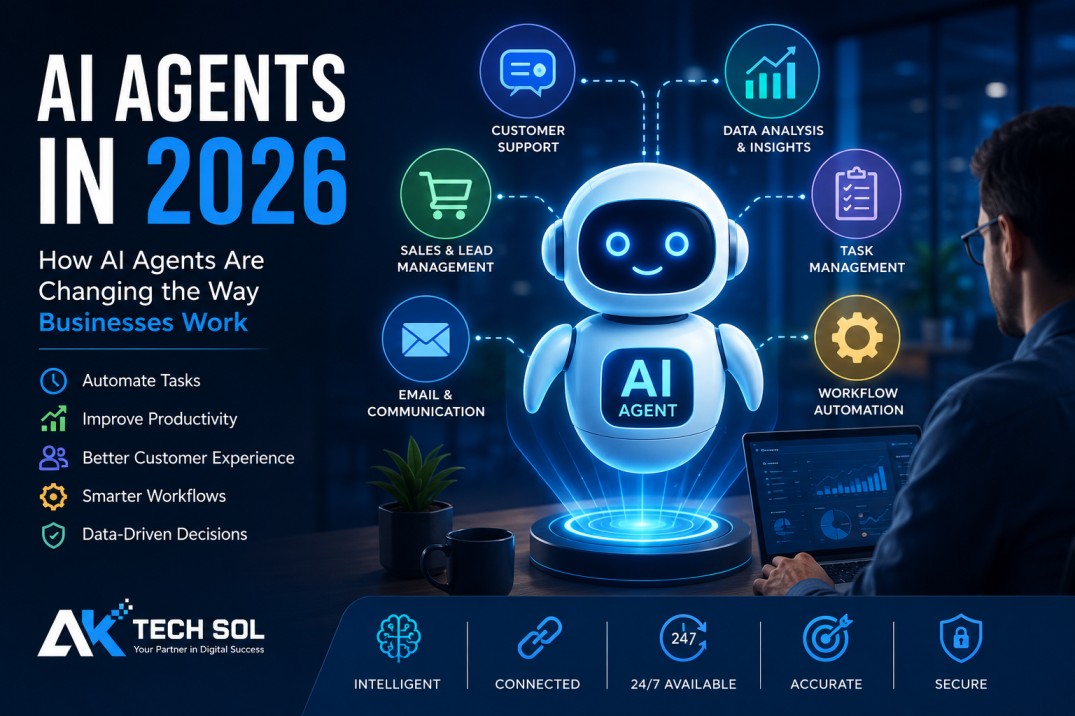
AI Agents in 2026: How AI Agents Are Changing the Way Businesses Work
AI agents are becoming one of the most important technology trends in 2026. Learn how AI agents are helping businesses automate tasks, improve customer service, increase productivity, and build smarter workflows.
AI is entering a new era in 2026. Instead of just answering questions, AI agents can now complete tasks and manage entire workflows on their own. Businesses no longer just want information. They want results, and that shift is changing how companies operate.
What Is an AI Agent?
An AI agent understands a goal, figures out the steps needed to reach it, and takes action using the tools available to it. Think of the difference this way. A chatbot might tell you, "Your order is being delivered." An AI agent goes further. It checks the order, notices a delay, opens a support ticket, and brings in a human teammate if the issue needs personal attention.
Put simply, a chatbot helps you talk to AI. An agent helps you get real work done with AI.
Where AI Agents Are Making an Impact
- Customer support: AI agents handle common, repetitive questions so support teams can spend their time on complex issues that actually need a human touch.
- Sales: They organize leads, draft follow up messages, and keep records updated, giving sales reps more time to build real relationships.
- Marketing: Agents can analyze campaign performance, organize customer data, and even draft content ideas for a team to review and refine.
- Administration: From summarizing documents to preparing reports, agents take routine admin work off employees' plates.
- Software development: Developers use agents to help generate code, run tests, and write documentation, always with human oversight guiding the final result.
AI Agents vs. Chatbots
The difference comes down to one thing. Chatbots communicate. Agents act. An AI agent connects information to real outcomes by checking systems, making decisions within set limits, and carrying out multi step workflows without needing constant human input.
The Benefits and the Risks
When implemented thoughtfully, AI agents save time, boost productivity, and let businesses grow their support capacity without growing their headcount at the same pace. But with more autonomy comes more responsibility. Companies need to be clear about what an agent can access, which actions require human approval, and how mistakes will be caught before they cause real problems.
How to Get Started
- Identify a task that is genuinely repetitive and time consuming.
- Choose one workflow to automate first, rather than trying to do everything at once.
- Start small and test the agent thoroughly before scaling it up.
- Set clear permissions and require approval for sensitive actions.
- Monitor the results closely and keep refining the process.
Will AI Agents Replace Employees?
Not really. AI agents can take repetitive work off people's hands, but businesses still need humans for creativity, judgment, strategy, and accountability. The more realistic future is one where people and AI work side by side. Agents handle the groundwork, and people make the important calls.
Final Thought
AI can provide the capability, but smart business decisions will always determine the value. The companies that come out ahead won't be the ones using the most AI. They will be the ones using it with the right strategy, the right guardrails, and genuine human oversight.